10/04/26
Q&A: Charlotte Colbert on 'Chasing Rainbows'
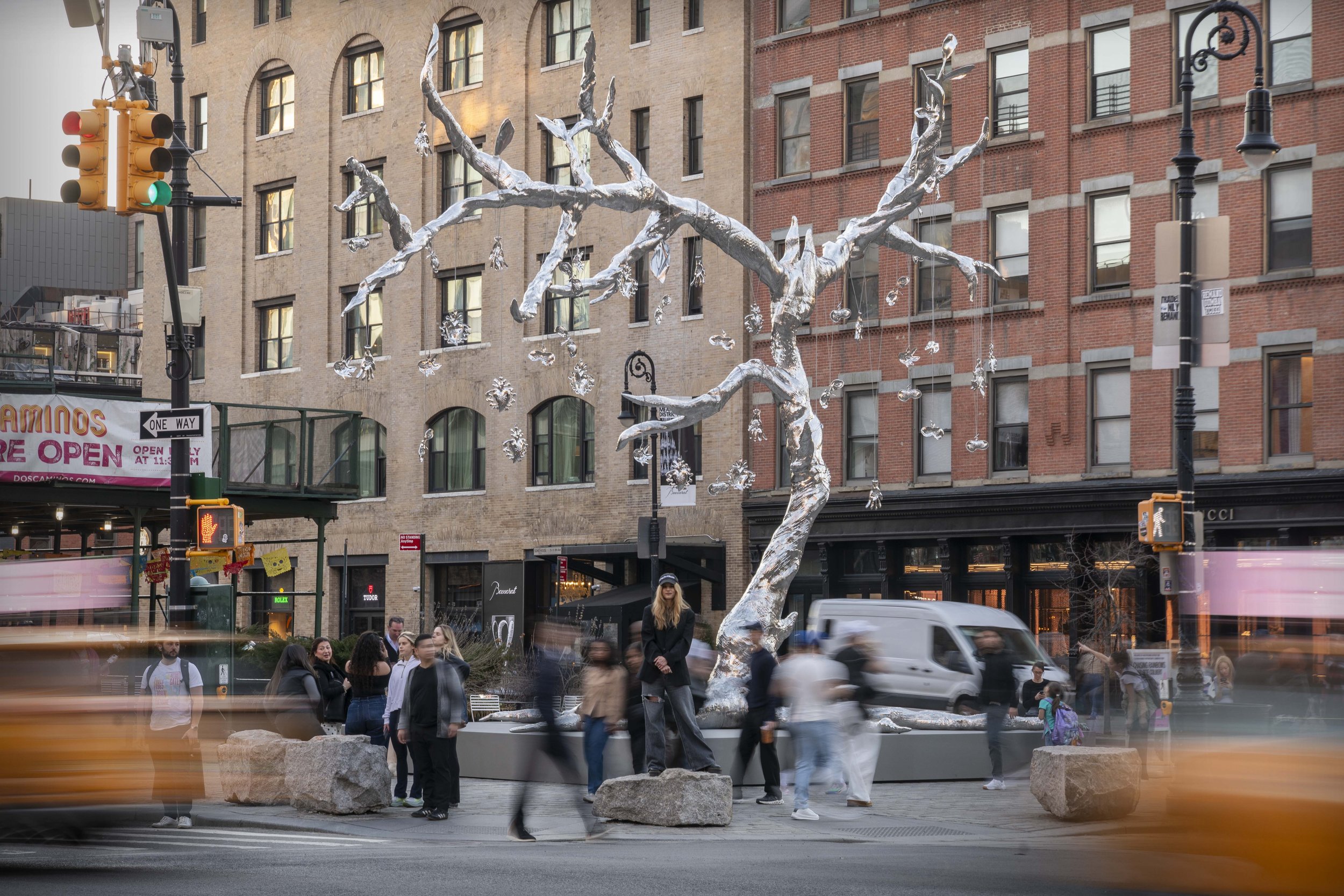
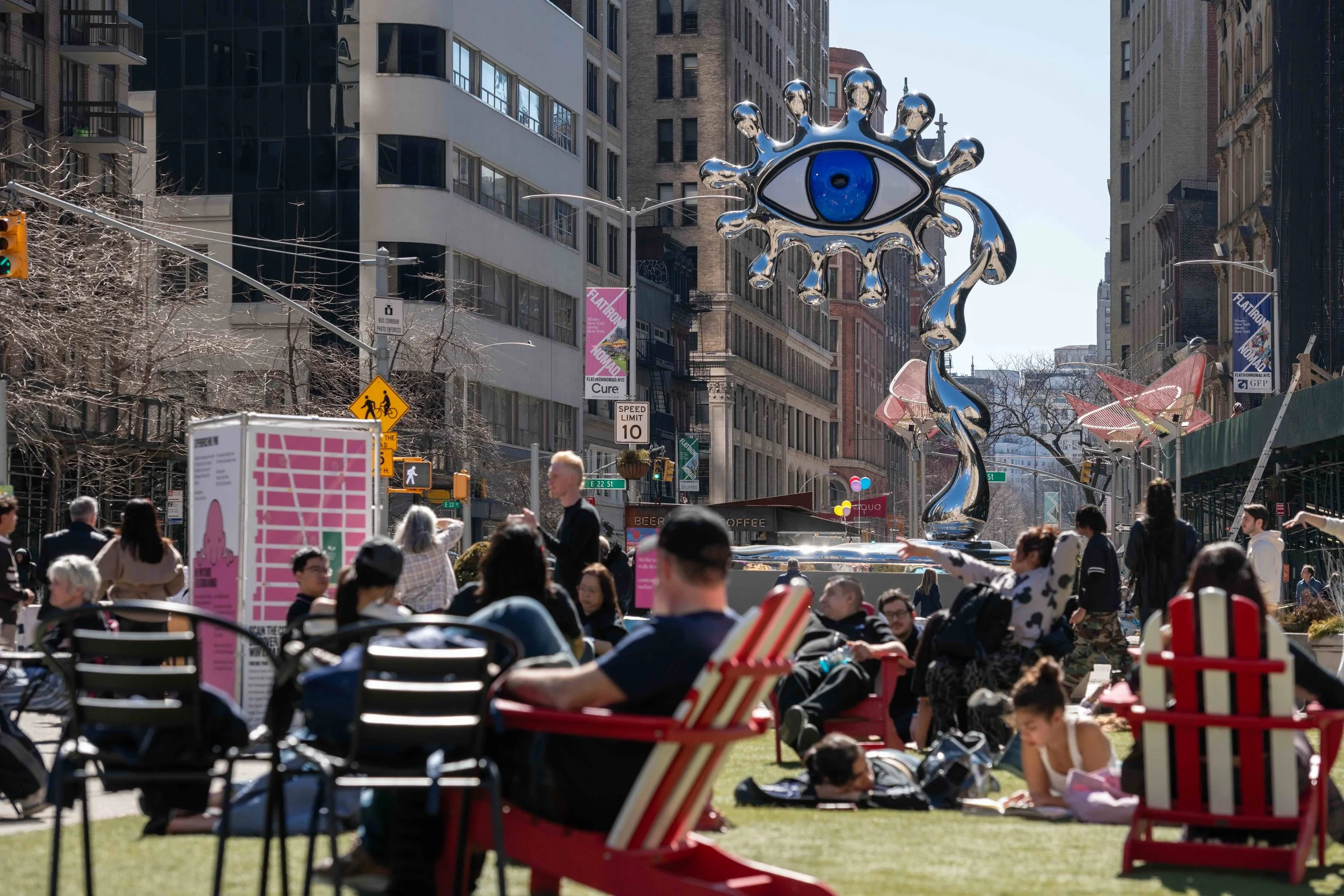
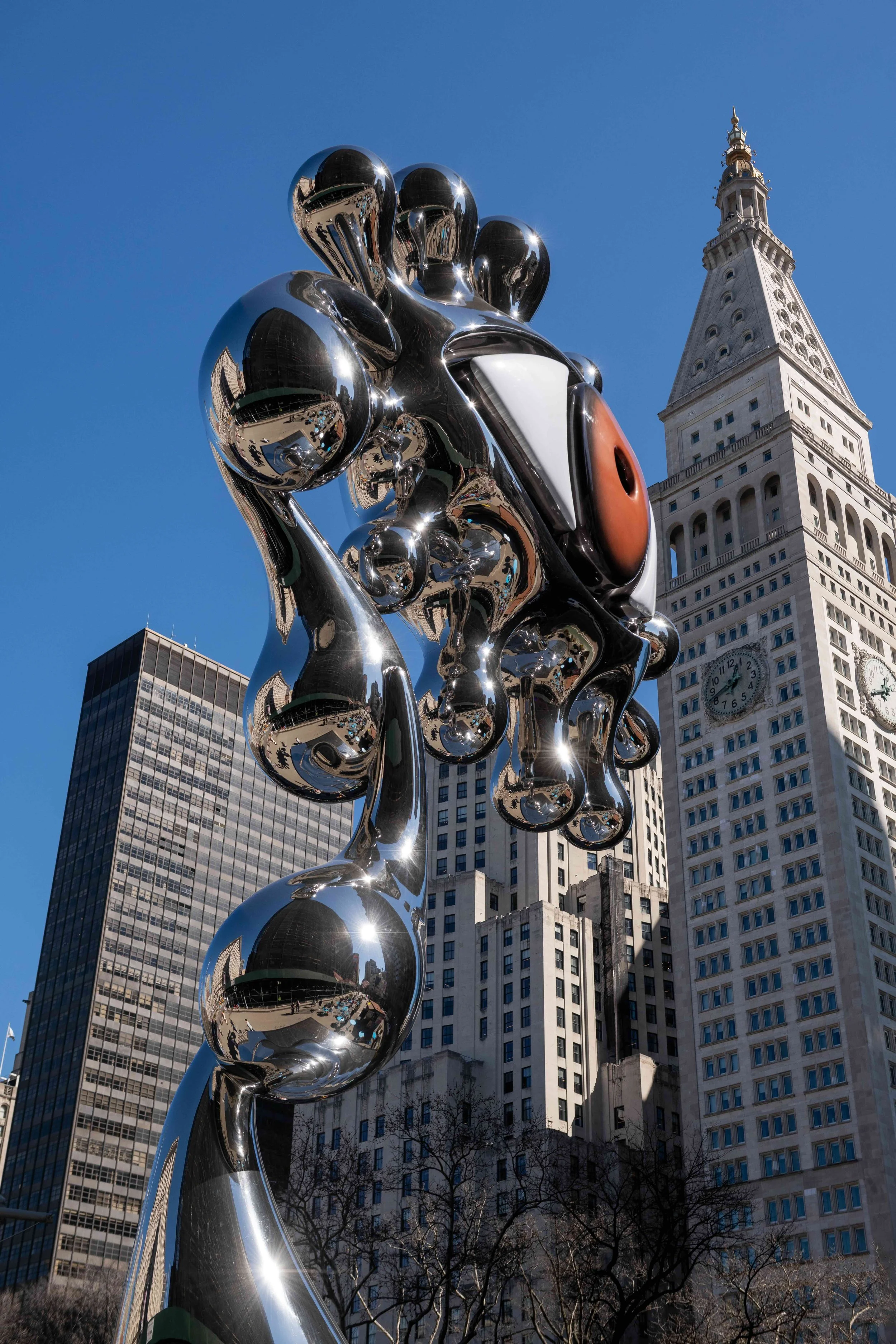
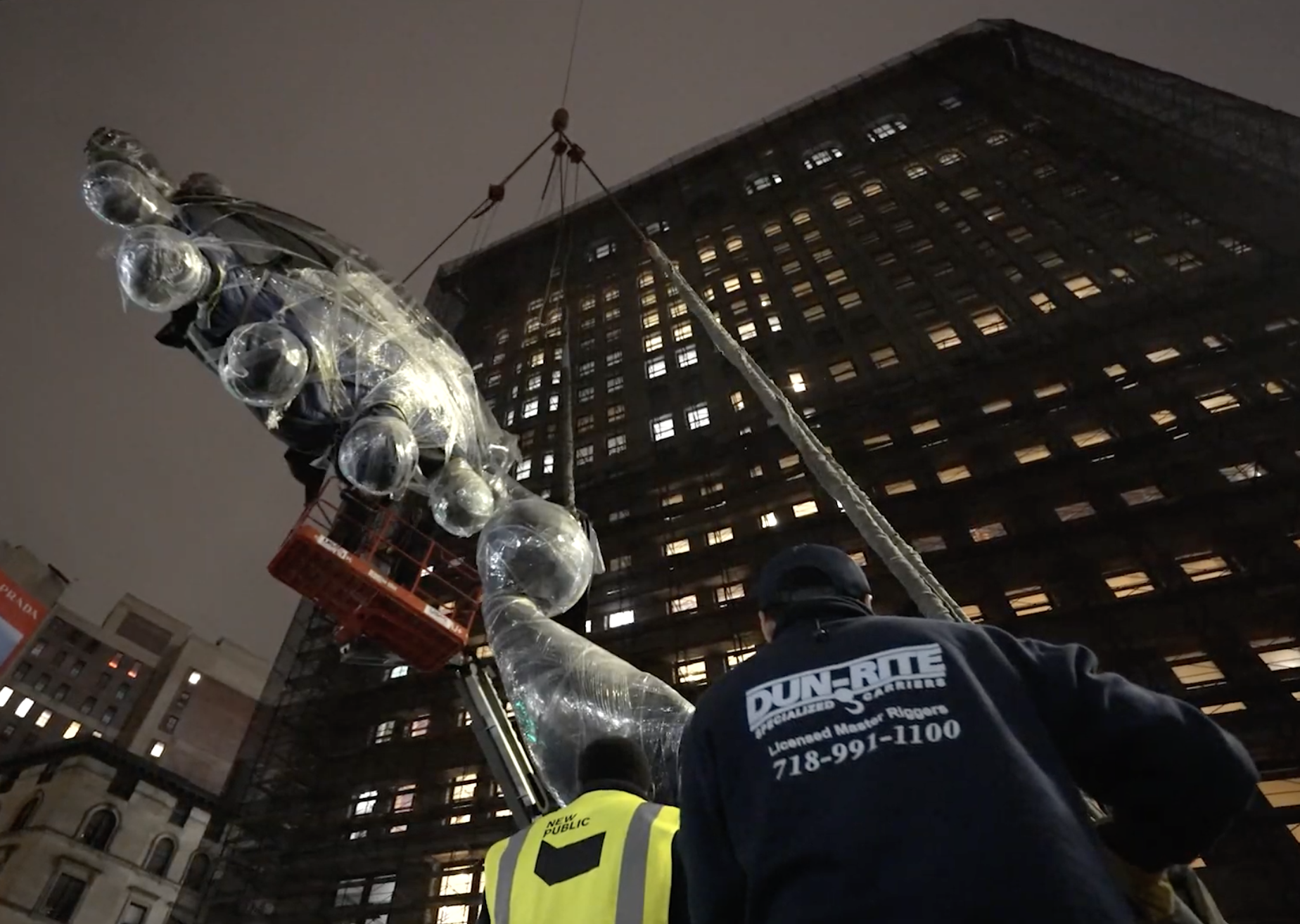
Chasing Rainbows marks the global premiere of two monumental 30-foot-tall steel sculptures by Colbert, her first U.S. public art presentation and New Public’s first international project. More than a year into the making, the project also brought together two New York District BIDs for the first time in their history. Unveiled in high-traffic, open-air pedestrian plazas across Manhattan, New York, the work’s scale reflective steel surfaces, and the surrealist expression bring childlike wonder into dialogue with the monolithic proportions of the city. We caught up with Charlotte ahead of the launch to ask her more about her practice and her global premiere.
You were born in New York State and now return to the city with this major public artwork, your first public art presentation in the U.S. How does it feel to bring Chasing Rainbows to a place that is personally significant to you, and in what ways has the city influenced the work?
CC: It’s absolutely amazing to be showing in New York City — the city of possibility, serendipity, and chance encounters — and to be creating chance encounters between people, sparking connection in an age when we’re almost taught never to speak to strangers. I think that speaking to strangers, talking to people you don’t know, reaching out, is a kind of defiance and, really, an act of freedom. So it’s wonderful to be participating in that through public sculpture.”
You work across a wide range of mediums, from film and sculpture to ceramics, furniture, objects and large-scale public installations. How does operating at this scale shape your storytelling and influence your material choices for this project?
CC: I’m really interested in storytelling: the stories that define us, the stories we tell our children, and the stories we tell ourselves. A lot of my work centers on psychology, psychoanalysis, fairy tales, archetypes, and narrative.
My practice developed along a kind of double path. I was writing scripts for people and for films, and after spending so much time sitting down, I felt like I was losing my mind. So I started taking photographs. In those photographs, I began staging more and more scenes and incorporating more and more props. The gallery that represented me then asked me to show those props as sculptures.
So this dual approach to my practice evolved across mediums and formats. Working with actors, performers, and so many different kinds of talent in film, I’ve brought that same philosophy into my art practice, expanding it into furniture, crockery, and beds. I love designing beds because I think of sleep as a portal, and beds as these amazing spaceships that carry us between worlds: the world of sleep, where we all connect in our unconscious goo, and the world of waking reality.
As a result, I feel that working across different mediums and through different collaborations is a wonderful way to explore themes and questions that I find relevant and interesting.
Projects of this scale involve multiple collaborators across disciplines and geographies. How does teamwork and partnership shape the realisation of your ideas, particularly when working in global locations?
CC: I mean, you guys are the best collaborators at New Public, and obviously my wonderful team at the studio as well. I guess the whole of human society evolves through collaboration. To get an orange onto our doorstep requires pickers, transporters, health and safety officers, and supermarket vendors. We live in a society built on trust, and that’s why this cultural turning point is, I guess, such an incredibly complex and potentially worrying one. It is a moment in which trust is being eroded — in terms of truth, in terms of the information we receive — and once that is eroded, our whole society is put somewhat at risk, because it functions on this basic idea of being able to trust others to deliver to certain standards.
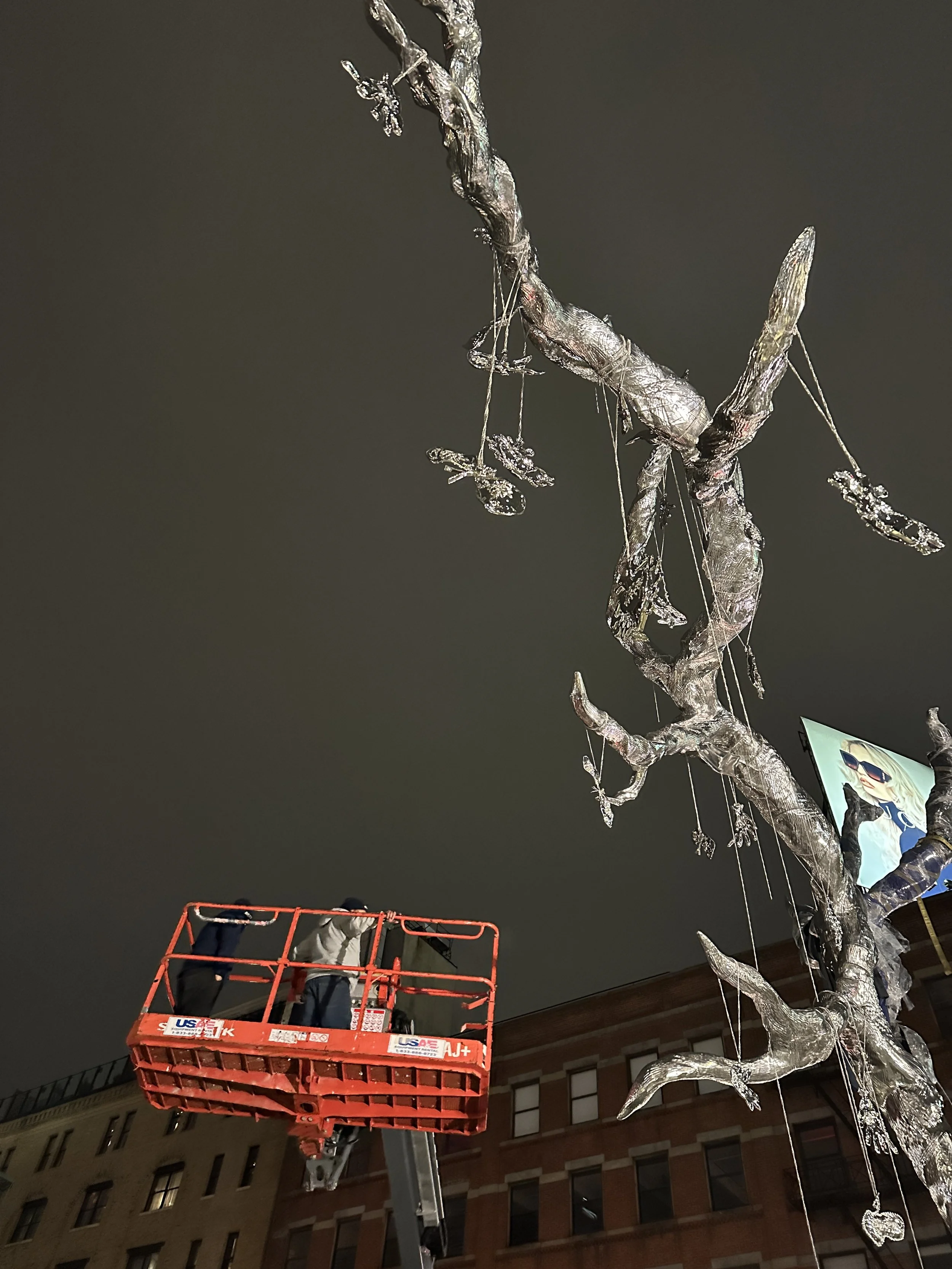
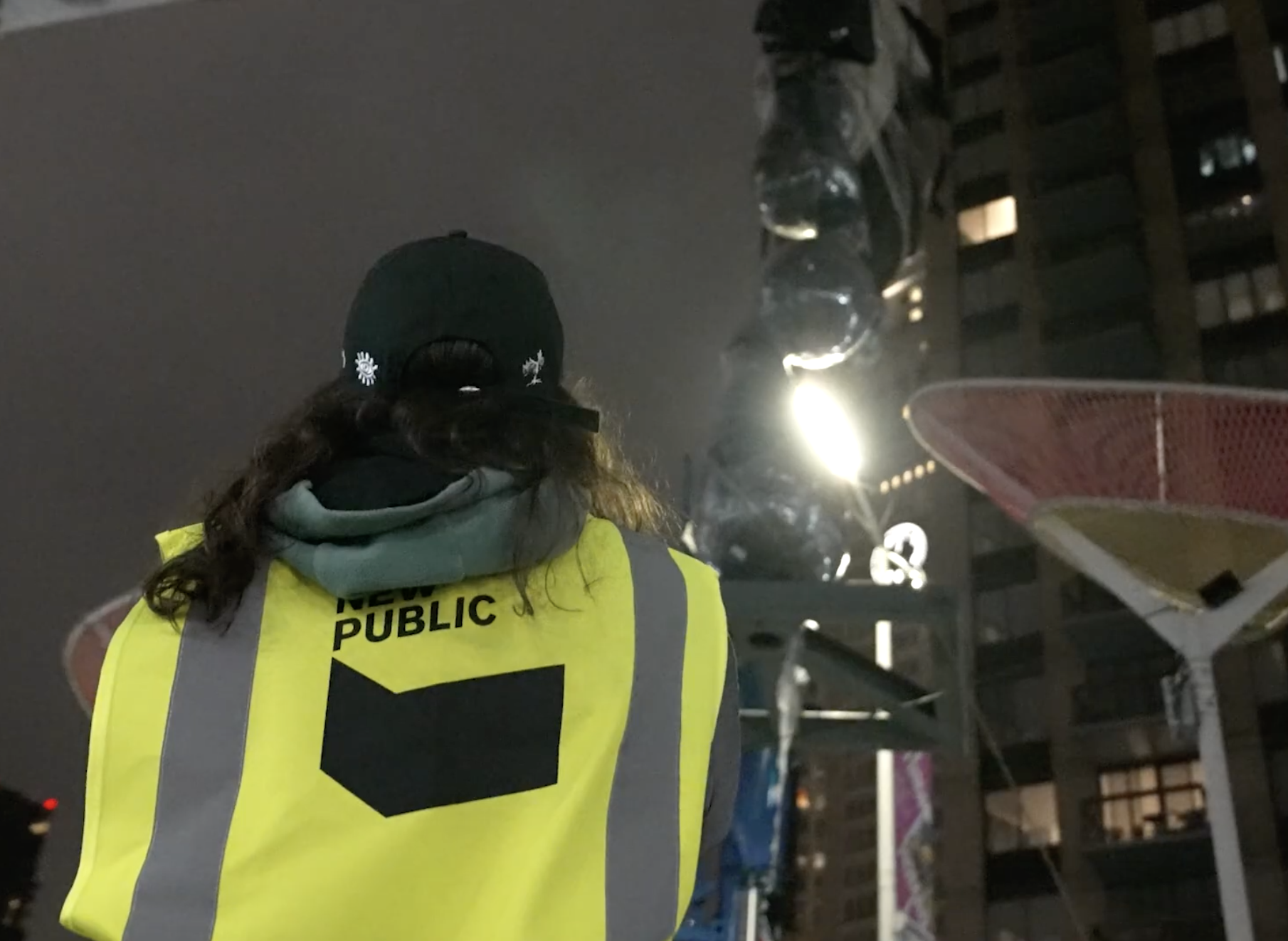
You walk into a restaurant and hope you don’t get food poisoning; it’s a similar thing with these bigger collaborative structures. Part of the wonder and marvel of doing projects like this is that you get to meet so many extraordinary people, from all the wonderful team members who helped put the sculpture together — many of whom were from Mexico and really connected to the themes of the milagros and the trees.
It has been a wonderful experience. And obviously these projects take so long that they become a long, beautiful collaboration.
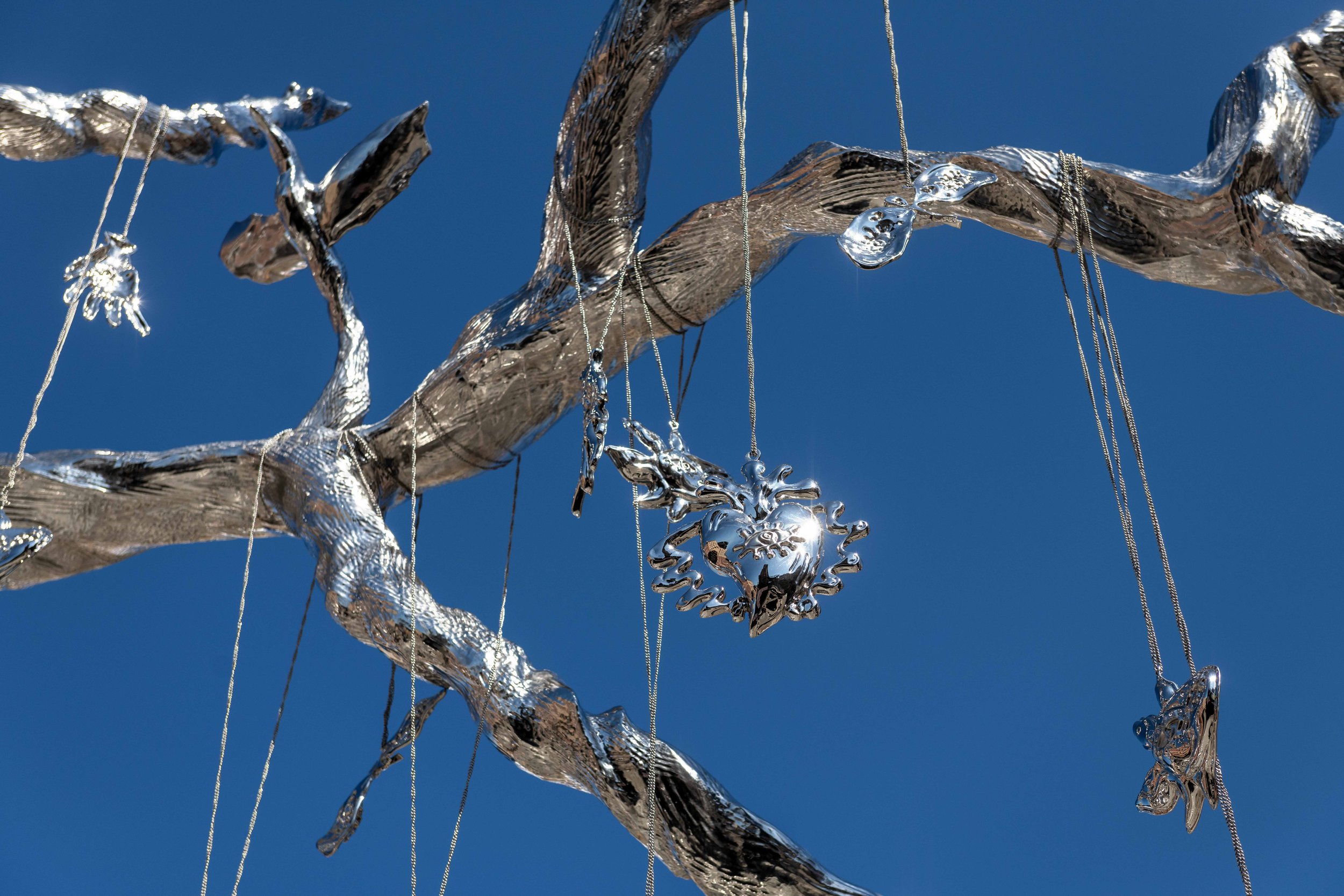
Childlike wonder and symbolism are recurring elements in your practice. In Chasing Rainbows, the eye motif and the hanging tree pendants feel particularly charged with meaning. How did your Latin American pilgrimage inform these symbols, and how do they help create moments of pause, protection and reflection within busy urban environments?
CC: I love amulets and objects that are believed to carry inherent magical properties. I think that’s because I find the idea of belief such a powerful, extraordinary thing. Through belief - belief in a shared reality, belief in language, belief in one another, we’ve managed to create all of this incredible stuff. There’s something about the core of that idea that feels so extraordinary to me.
And the milagro is, in a way, the ultimate expression of belief. It’s the idea that you can take an object and imbue it with a certain power, so that it either protects you from evil or, in this case, helps to heal you. Traditionally, you take something that represents an ailment or a problem and hang it on a cross, but here it’s hung on a tree.
Trees, for me, are the ultimate connectors to deities. They’re so magical, and they carry so much spirit with them.
I’m not religious, though. I’d say I’m agnostic - I really don’t know. But I did go on a pilgrimage to Santiago and walked 500 kilometers across Spain. It was an amazing experience because, at the end, you place your hand onto a sculpture of Santiago, a marble sculpture that is thousands of years old. Your hand slides into a groove that has been worn away by the millions of hands that came before you - people who wished before you, who hoped before you. And in that moment, you feel yourself becoming part of this long tradition and history of belief.
It’s very poignant.
What do you hope passersby, whether intentional viewers or unexpected audiences, feel or reflect on when encountering these female-centred sculptures in historically male-dominated spaces such as the Meatpacking District? Installed around International Women’s Day, how do you see the work engaging with the area’s heritage and its evolution into a more inclusive, civic space for community and collective reflection?
CC: Yeah, I guess for me, the most wonderful thing about the space of the street is its possibilities and its randomness, and the fact that it can take you out of your schedule and your sense of busyness. Everyone is always going somewhere, but through these kinds of interventions, there is potentially a moment of respite from purpose, which opens up the possibility of newness, of reassessment, and of different kinds of connection.
New Public is a women-owned and operated company, including working mums, we’re forever inspired by other women making it work. How do you juggle the balance of being an artist, filmmaker and mother?
CC: New Public, of course, is awesome. It was amazing in our meeting the other day to see a whole team of formidable women.
I’m obsessed with this idea of the coven. I’m surrounded by wonderful, strong female friends, supporters, and collaborators, without whom I really couldn’t function. There’s something so magical about that coming together and about those collaborations, so it’s an added joy and pleasure to work with an essentially female team.
And yes, we mentioned International Women’s Day. It’s a wonderful celebration, and really, every day should be International Women’s Day - and International Human Day too. I think this is an incredibly difficult time in which to remain human, and to uphold dignity, love, freedom, kindness, empathy, and genuine communication with others. Those values feel as though they are being steadily eroded.
So yes, let’s celebrate the possibility of becoming more human, as well as International Women’s Day.
I recently did a collaboration with UN Women UK, who are doing incredible work. I was very honored to design their award this year, which they give to these outstanding women who are so important within the communities in which they work. It was a really humbling experience, especially when you think about their efforts and everything they do.
What is next on the horizon for you - new projects or explorations?
Yeah, so what’s next? Well, this year is fairly busy. We’re doing another installation during the Venice Biennale, along the Grand Canal opposite the Guggenheim, of a large public work, and then another one in Dallas. I’m also currently speaking from the edit of a feature film that we shot earlier this year, which is set to come out in 2027 and explores many of the same themes as my art practice.
Thank you again, New Public. Thank you again to my team. Thank you again to New York. Thank you to Meatpacking to Flatron to dot and yeah, really excited to be here and a small part of this massive, massive, incredible city. You.