03/02/26
Q&A: Lakwena on 'Rise and Shine'
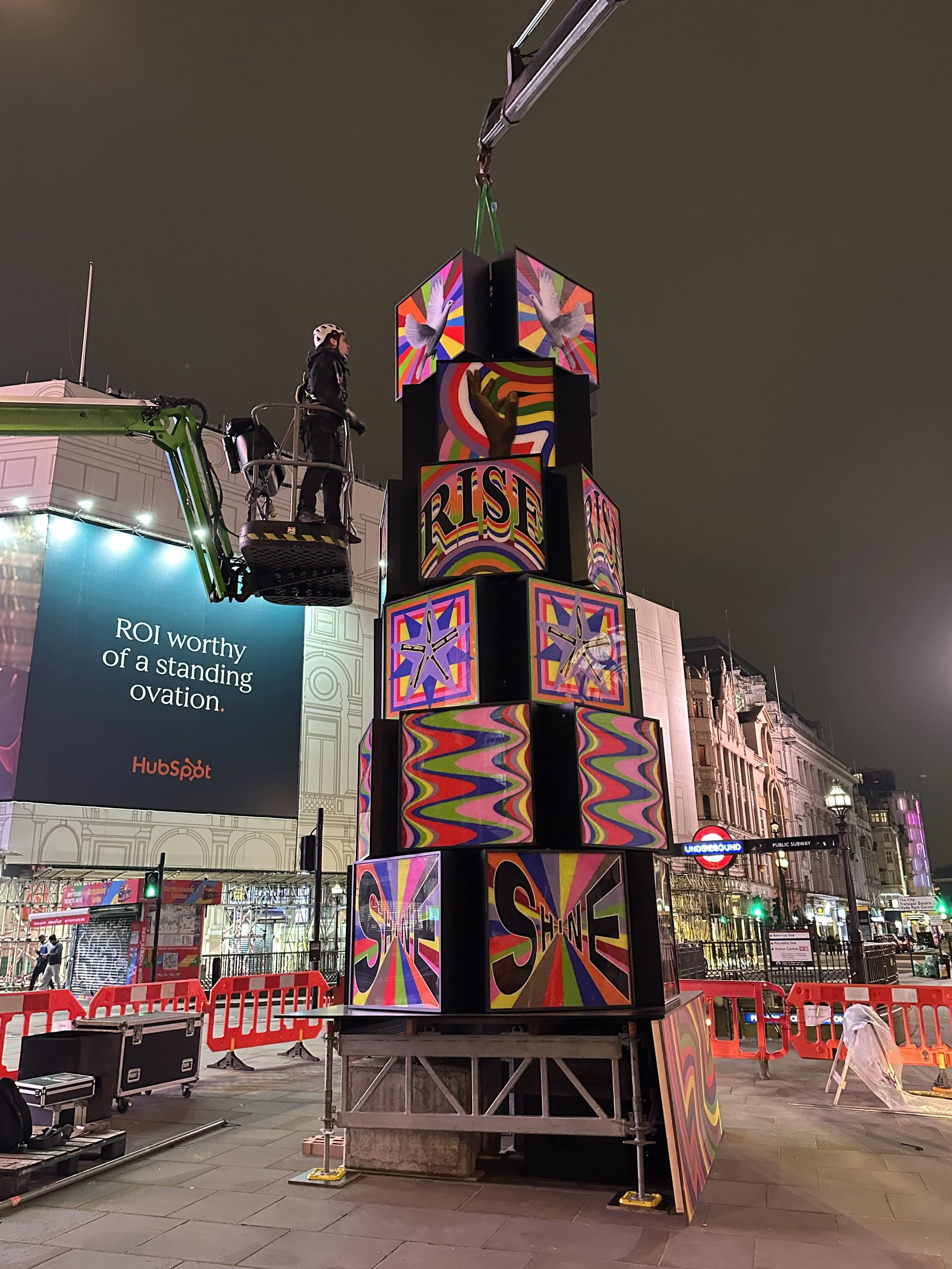
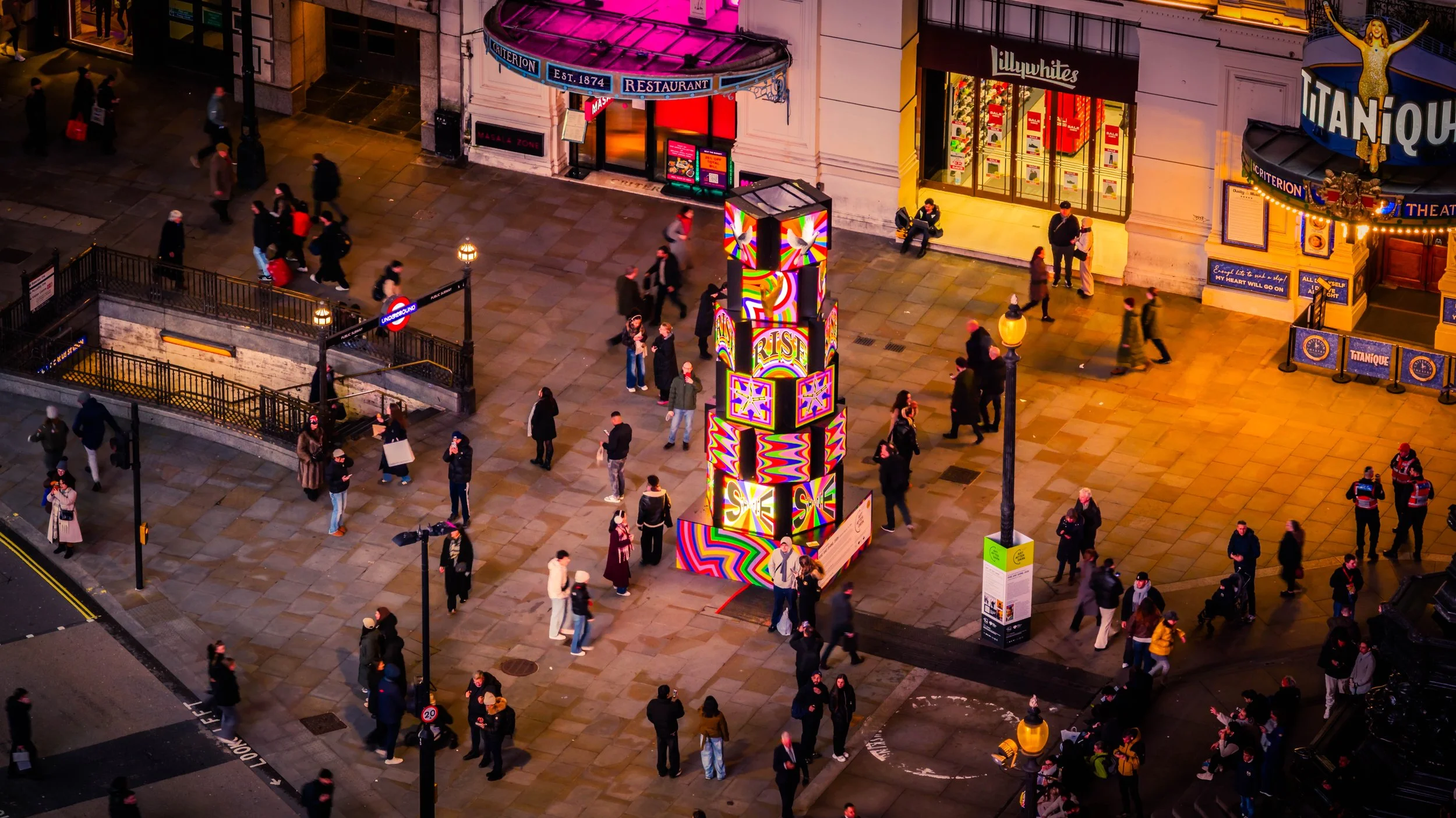
February saw Rise and Shine by Lakwena Maciver transform the heart of Piccadilly Circus with a seven-meter illuminated tower and digital programme across the Piccadilly Lights and screens throughout the West End. The week-long installation drew inspiration from disco lightboxes and sound system culture, inviting passers-by to pause, gather and experience something joyful together.
Community and collective energy often sit at the heart of your practice. How does this project reflect your interest in bringing people together through art and nightlife culture?
LM: Community is central to everything I create. With Rise and Shine, I was really thinking about the shared energy of music, nightlife and gathering in public space - those moments where strangers come together through sound, rhythm and colour. Installing the work in Piccadilly Circus felt important because it’s such a democratic site, where people from all walks of life intersect. I wanted the installation to act almost like a visual sound system: something joyful, open and collective that invites people to pause, gather and experience something together.
Black music, heritage and sound system culture are other central influences in this project. How do these shape the energy of this installation?
LM: Black music and sound system culture are huge influences in my practice. They represent joy, resistance, identity and community, and that energy runs through the visual language of the work. The stacked lightbox form references classic sound systems and the visual spectacle of music culture, particularly from the 80s and 90s - a period that shaped genres like hip-hop, soul and drum and bass. It’s about honouring those cultural histories while translating their rhythm and vibrancy into a visual experience in public space.
Your use of bold colour and positive slogans is instantly recognisable. How do these elements help create connection and shared experience in public space?
LM: Colour and text are my tools for accessibility. I want my work to feel immediate and welcoming, not something that requires prior knowledge to engage with. Bold colour attracts attention and lifts the atmosphere, while positive language creates moments of reflection and connection. In busy urban environments, these elements can cut through, offering something hopeful and uplifting.
You work across a variety of mediums, including painting, public art and brand collaborations, most recently the Christmas light projections on Battersea Power Station and a handbag collection with Dior. You also launched a brilliant range of merchandise at the end of last year that includes tea towels, wooden combs and beaded phone charms. How have these different contexts influenced your approach to scale, materials and visibility?
LM: Working across different contexts has really shaped how I think about scale and audience. Public art demands a different level of visibility and impact - it has to speak to everyone, not just a gallery audience. Collaborations, whether with brands or institutions, also push me to experiment with materials and formats while keeping the core message intact. Ultimately, the approach stays consistent: creating work that is immersive, optimistic and rooted in shared cultural references, regardless of the medium.
What do you hope people feel, think or take away when they encounter your work?
LM: I hope people feel a sense of joy, possibility and belonging. My work is about creating moments of connection, where people can pause, feel uplifted and maybe see surroundings or settings differently. Even a brief encounter with colour, light and positive messaging can shift the energy of a space and create a shared experience.
New Public is a women-owned and operated company, including working mums, we’re forever inspired by other women making it work. How do you juggle the balance of being an artist and mother?
LM: My priority for the past 10 years has been having kids and spending lots of time with them in these precious early years. So with each of them until they were 3 I only worked part time. To be honest it’s been really really difficult, messy and chaotic, and it’s been hard not being able to give everything to my work, and I think being surrounded by a majority of woman artists who don’t have kids, or maybe just have 1. But I chose to make those sacrifices and I’m gradually coming out of that season now with my youngest getting to that stage at the end of this year. And looking back I am really happy with the decisions I made, as hard as they were. Balancing motherhood and a creative practice is definitely a constant negotiation, but it has also deepened my perspective and sense of purpose. My practice often centres on hope, community and future generations, and being a mother has strengthened that focus rather than taken away from it. So I feel I’ve sacrificed a lot, but I am just so much richer for having them.
What is next on the horizon for you - new projects or explorations?
LM: I have a major installation launching at the Southbank Centre this spring. It’s a collaboration with my sister, musician Abimaro. We’ve also collaborated with young people on creating the installation and composing a song which will be installed alongside it. I’ve been doing more workshops and collaborative projects in and out of my studio. I’ve loved having events and bringing people in to my studio, and this is something I’m looking forward to growing in. I want to work collaboratively with people more, and be engaged with community more as I really believe in the value of that. So this Southbank project is a very exciting way to begin that journey. I’m also working on a really exciting project involving a Venetian mosaic factory that is soon to be launching. I always enjoy exploring working with new techniques and materials and seeing how it allows my work to evolve.