01/07/26
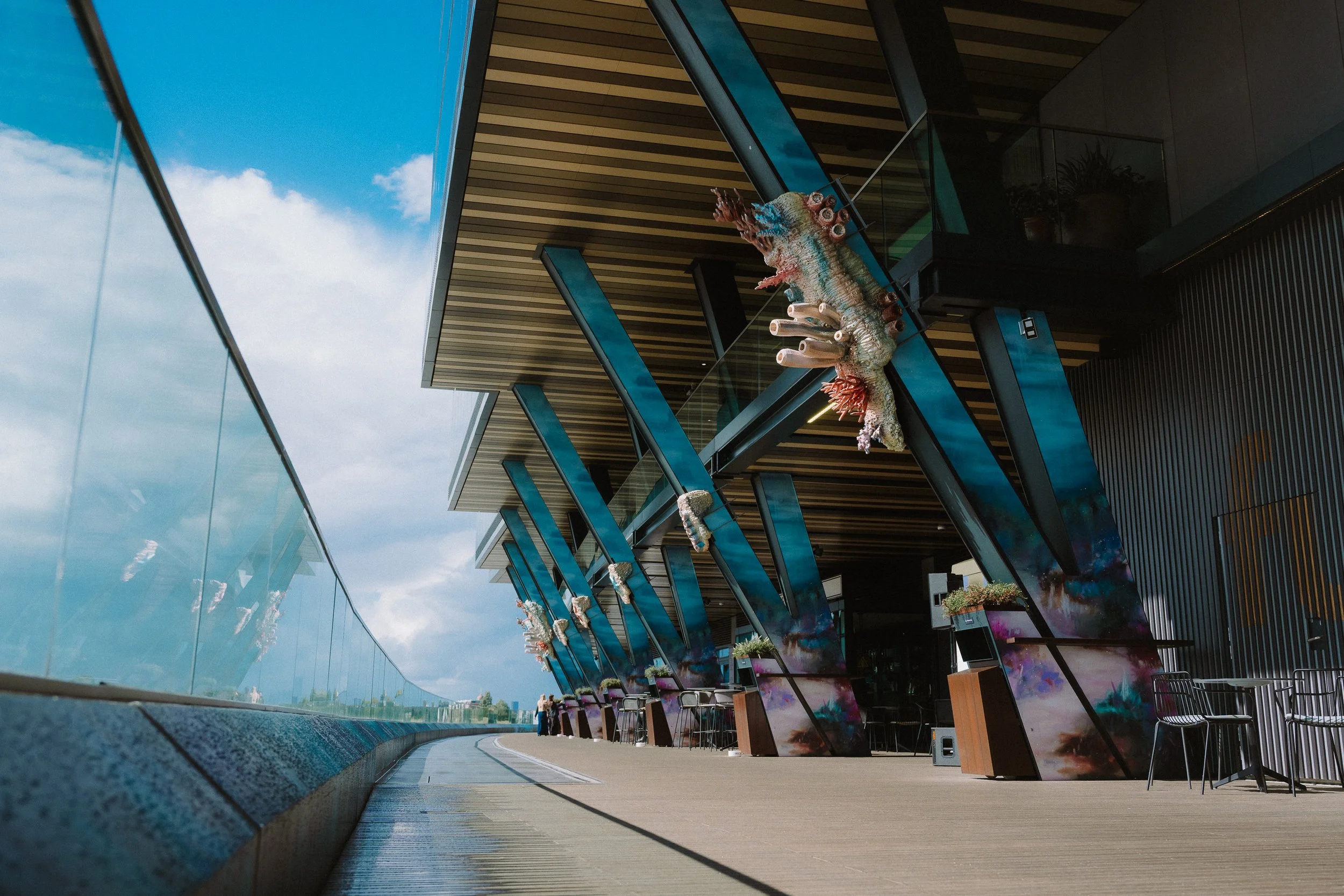
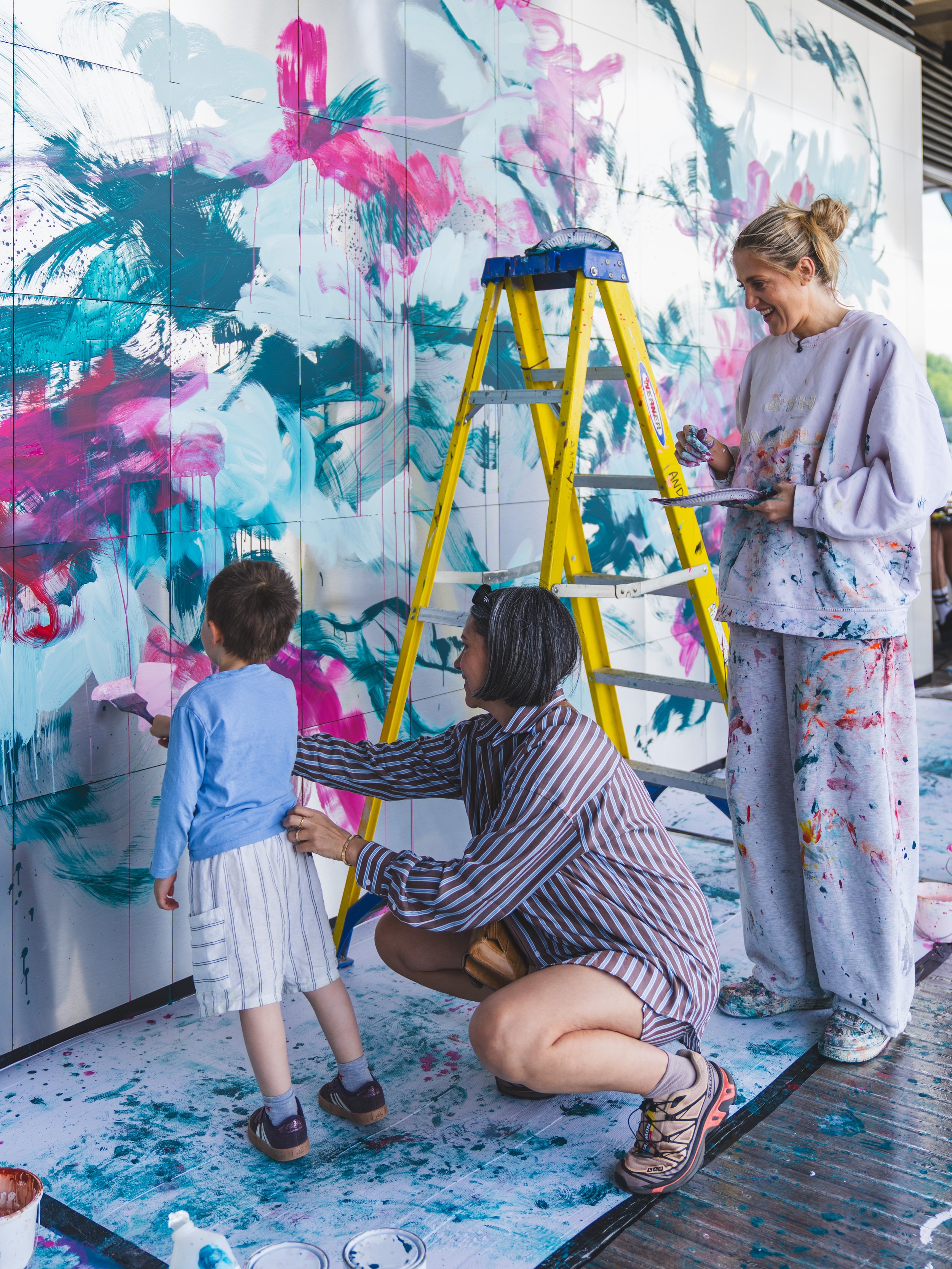
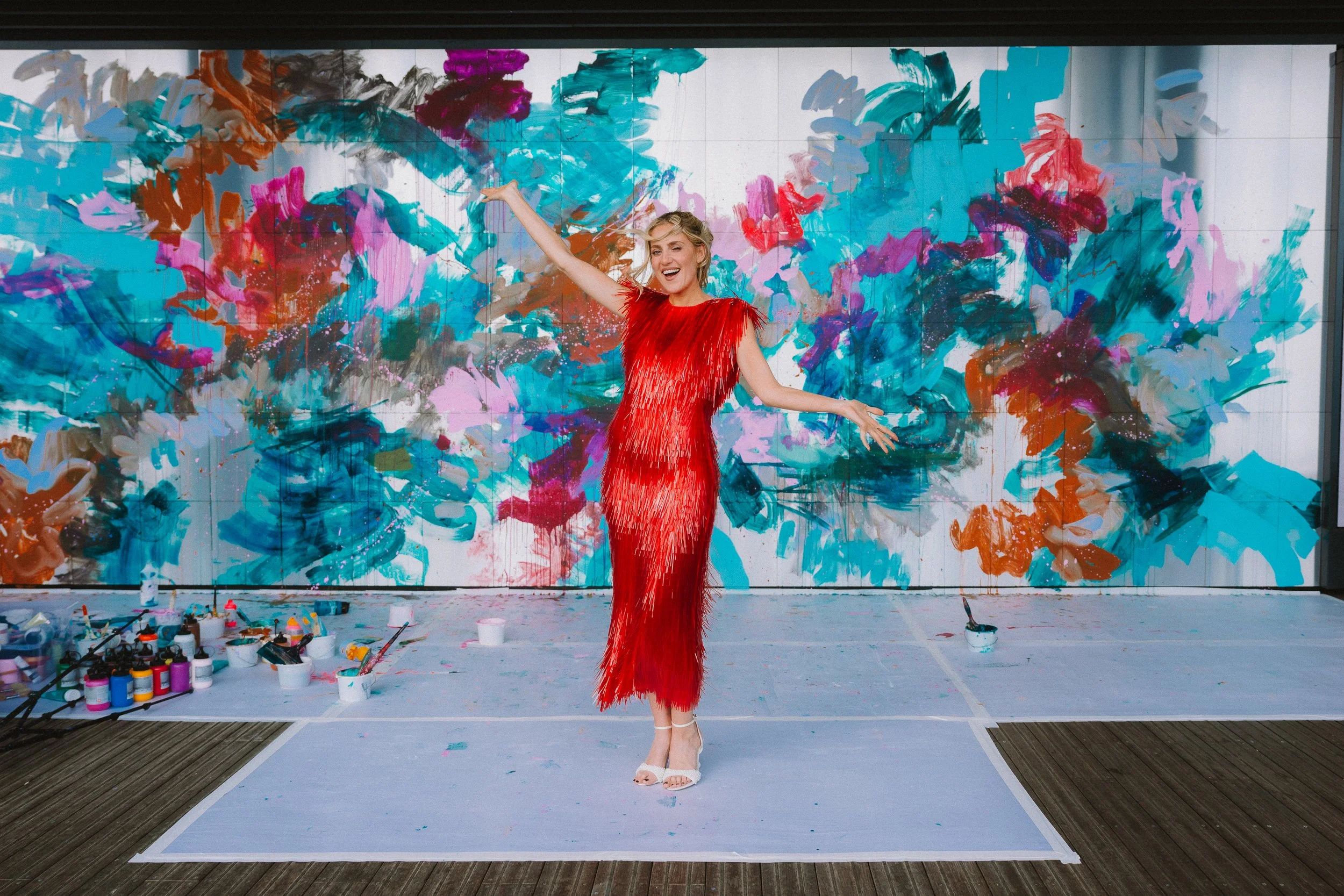
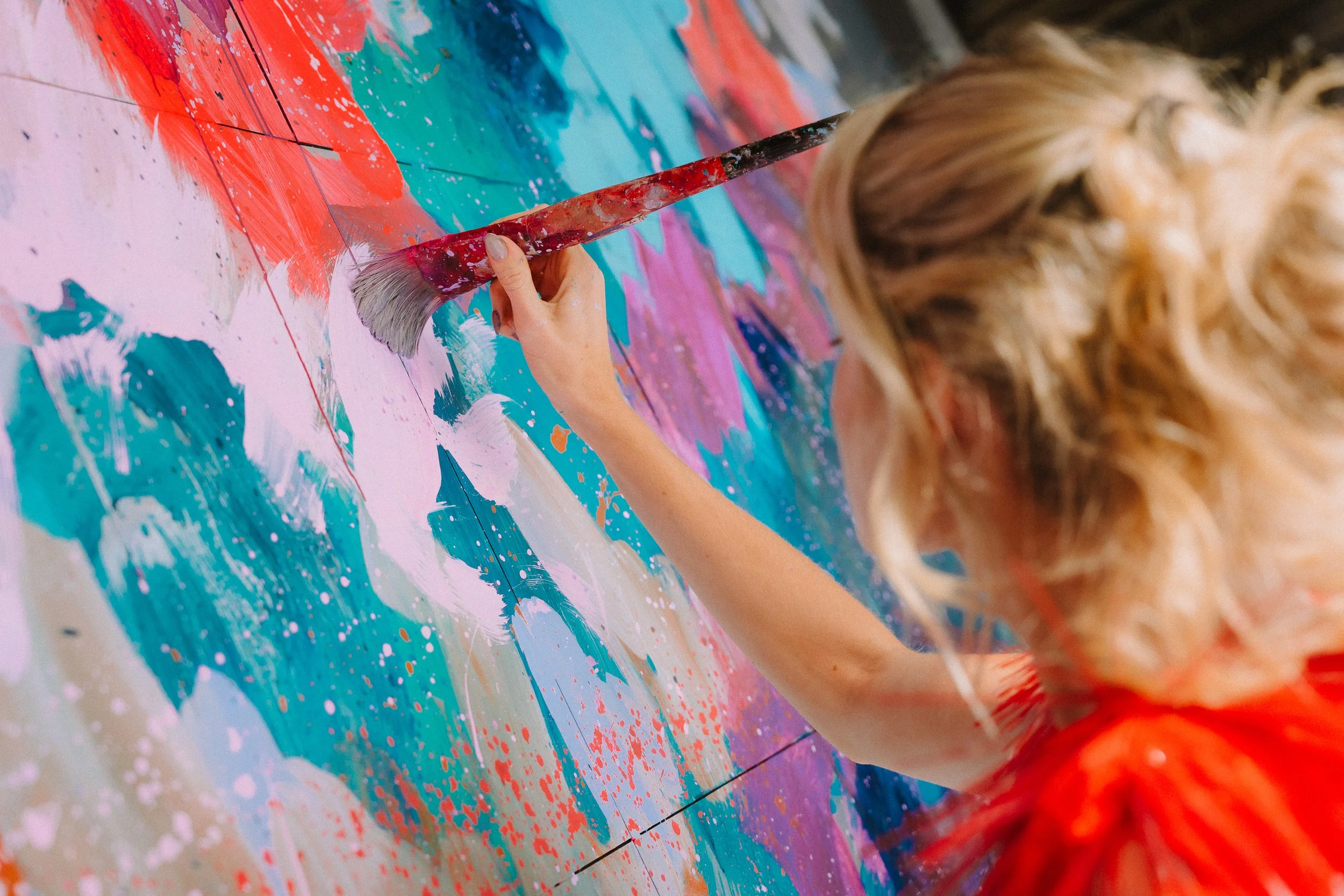
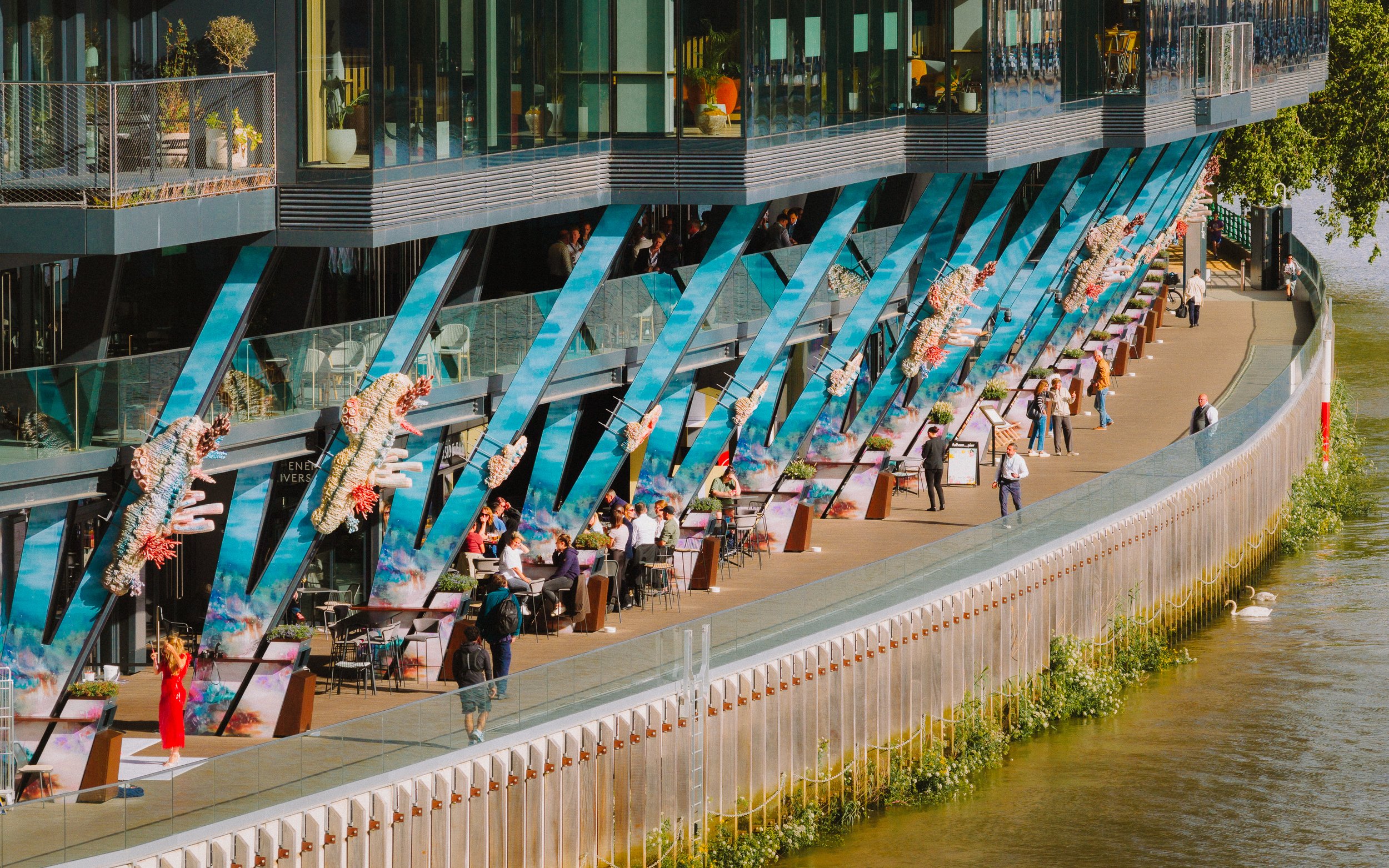
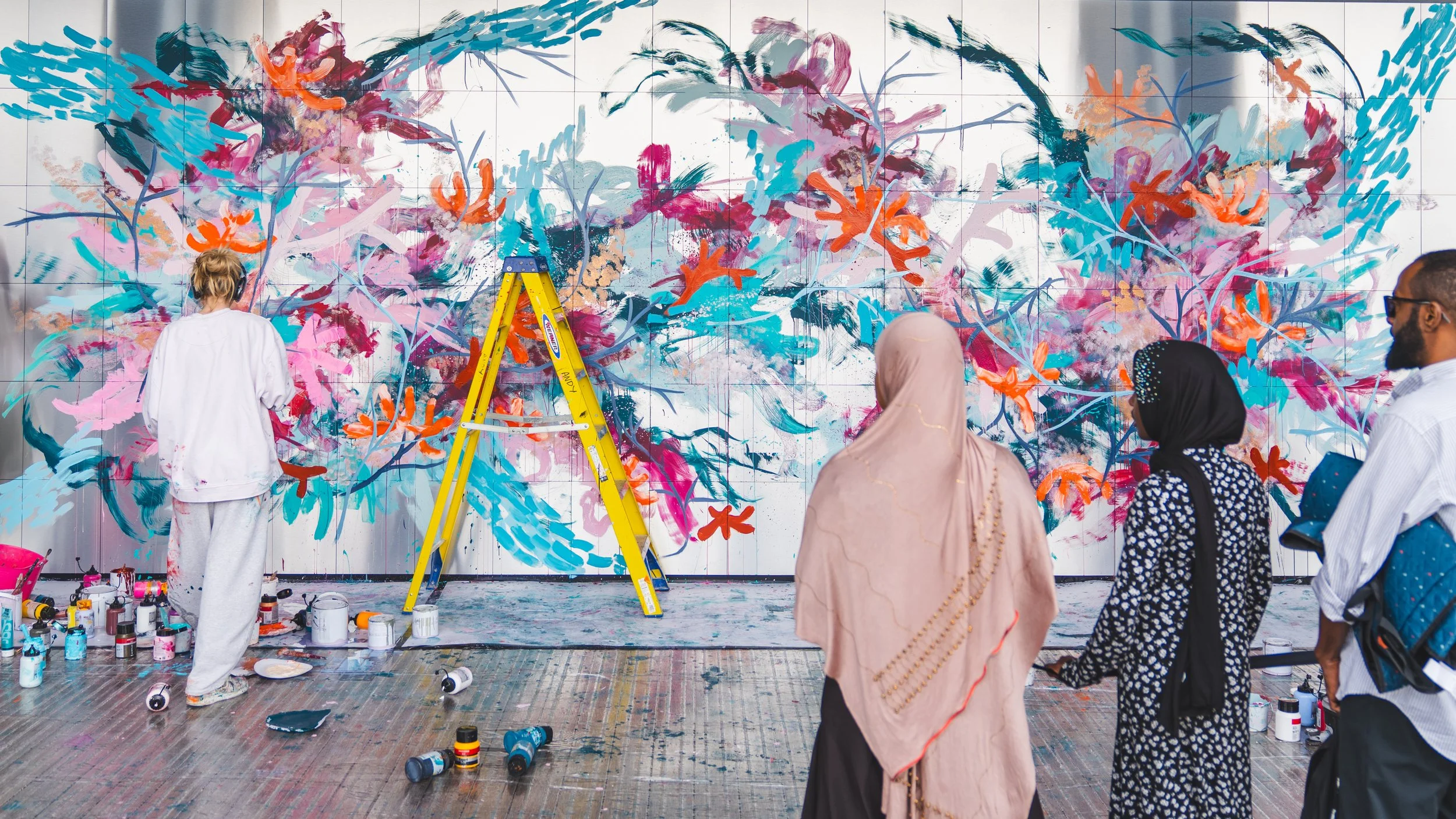
'Under the Pier' brings Sophie’s world to the Thames, a bold, colourful reimagining of the British seaside, spanning 20 architectural beams and surrounding walls with painted works and 3D seaside moments taking over Fulham Pier’s riverwalk. This is our second time working with Sophie, after launching her first brand collaboration with Gallinée skincare. Now, we’re bringing her first public artwork to life.
Q&A: Sophie Tea on 'Under The Pier'
Under the Pier marks your first public art commission, curated by New Public. How does it feel to bring your work into an open, civic setting at Fulham Pier, and what excited you most about working at this scale?
ST: Creating a public installation has been on my goal list on the fridge for over a decade, so this milestone feels incredibly special. My mission has always been about making art a bigger part of everyday life - no pressure, no feeling like you need to "understand" it to enjoy it. Working at this scale meant I could create moments people physically move through rather than just look at, and it's opened my eyes to how much more is possible. I'm incredibly grateful to New Public for holding my hand through the process because there's been so much to learn, and now that I've got a taste for it I'm definitely not stopping!
Accessibility and community are central to your practice, from your digital platforms to your wider creative world. How did you approach translating that energy into Under the Pier - a work that is free and open to the public this Summer?
ST: It felt like the most natural translation of everything I've been building over the years. What I stand for comes back to the fact that art shouldn't have a velvet rope in front of it. It shouldn't require you to know the right people or feel like you belong in a certain kind of room. So the idea of someone discovering this on a walk along the river felt completely aligned with what I believe in.
What I loved about this project is that it removes the decision entirely. You don't have to choose to go and see it, you don't have to buy a ticket. You're just walking along and suddenly you're inside it. That's the kind of relationship between art and the audience that has the power to change people's minds about whether or not art is 'for them'.
The community element has always been the thing that drives me. I've built everything I have through a direct relationship with the people who follow my work, and Under the Pier is just that relationship made physical - something I made for them, and for everyone else who happens to walk past. That's what accessibility actually means to me. Not just free entry, but art that genuinely belongs to the people who experience it.
The installation reimagines the British seaside along the River Thames. What drew you to this theme, and how did the Fulham Pier setting shape your ideas?
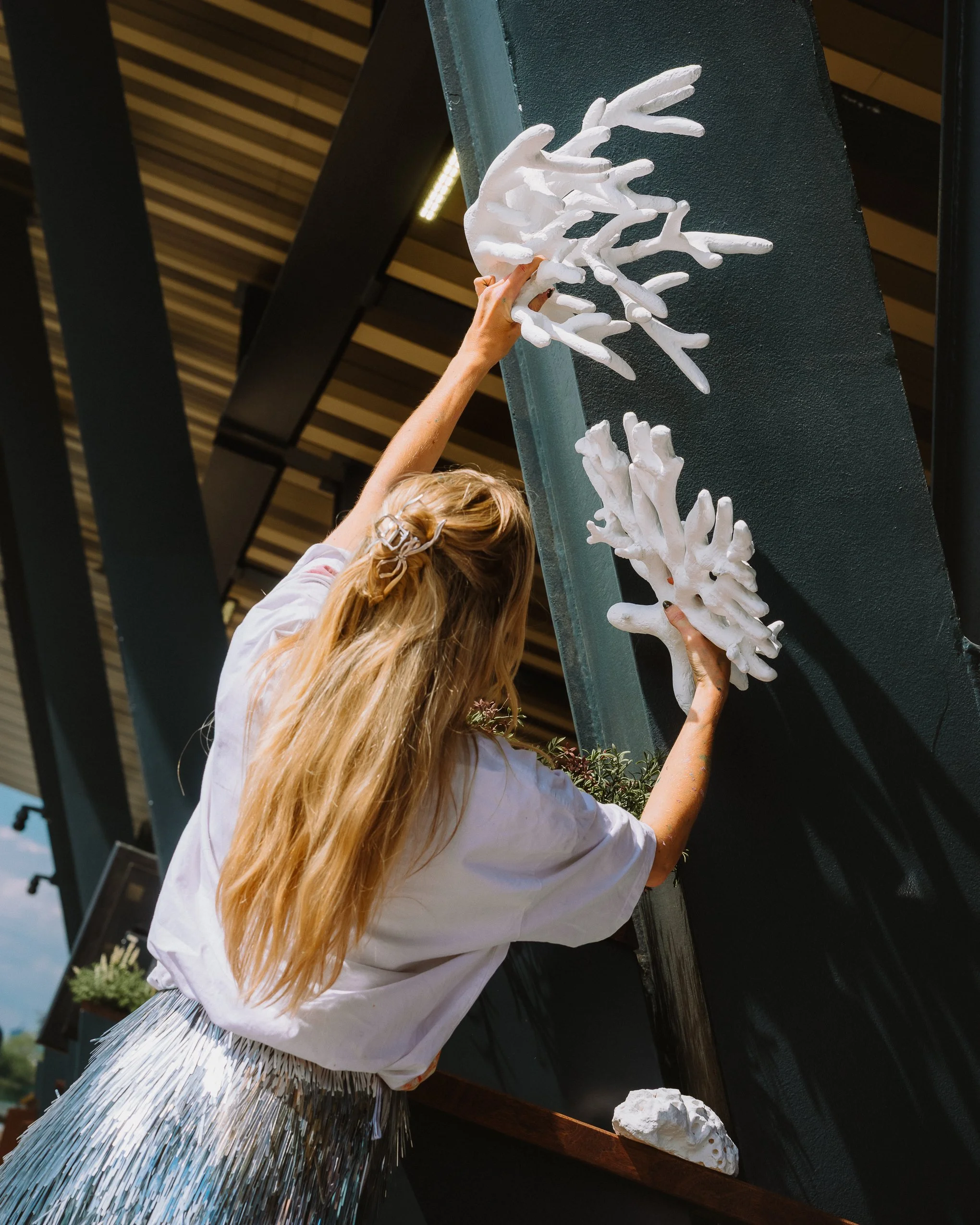
ST: I actually explored a lot of different ideas for this project but I wanted to work with Fulham Pier on a concept that felt like it reflected and fit within the venue, rather than being dropped on top of it. Florals are a really common motif in my work and I've also experimented a lot with painting water so the river felt like a natural starting point. Coral has this incredible quality as a subject, it's bold and graphic but also organic and alive, and the colours associated with it have such a perfect way of bringing a space to life. The Thames gives the whole thing a different energy too. You've got this ancient river running through one of the world's most amazing cities, and there's something quietly magical about placing something so vivid and alive along its banks. Fulham Pier itself has a real lightness to it - people come here to slow down, to be by the water - and I wanted the installation to add to that feeling rather than interrupt it. The coral world felt like the right way to add to this little escape along the Thames.
This project spans large architectural elements and includes sculptural 3D components. How did working across these formats influence your approach to materials and composition?
ST: The scale completely changed the way I had to think. I’m used to creating work that has a very immediate emotional impact, but here the canvas is architectural, it spans beams, walls and the riverwalk, so the work has to live in conversation with the building, the river and the way people move through the space.
The 3D sculptural elements allowed the installation to become more immersive. It’s not just something you look at on a wall, it starts to surround you and pull you into this multi dimensional world. I wanted the materials and composition to feel bold and generous, but still very “me”: colourful, emotional and full of energy.
You’ve built your career independently, outside traditional art-world structures. How has that shaped the way you approach collaborating with partners on a project like this public commission?
ST: A project like this reminds you pretty quickly that ‘independence’ doesn't mean doing it alone. This installation has been in the making since November 2025 and the number of incredibly talented people who've brought it to life alongside me has been one of the most joyful parts of the whole process. I've worked with materials I didn't even know existed before this project, sculpted coral for the first time, sailed on the Thames - and then painted the two biggest canvases of my life, live. None of that happens without an amazing team around you.
What I've loved about this collaboration specifically is that everyone involved understood what the work was trying to do and gave it the space to be exactly that. The best creative partnerships are the ones where the shared ambition is bigger than anyone's individual agenda - and that's exactly what this felt like. I'm genuinely so grateful to everyone who helped make it happen.
New Public is a women-owned and operated company, and we’re forever inspired by women building creative careers on their own terms. You’ve built your career independently, outside traditional gallery structures. What advice would you give to other artists hoping to forge their own path beyond the traditional art world?
ST: First of all, I love that New Public is women-owned and I think that alignment is a big part of why this collaboration has felt so right from the beginning. There's something really powerful about women building things on their own terms, in their own way, and I feel that every day in what I do.
The advice I'd give to other artists is that your audience is your infrastructure, so treat them that way from day one. The relationship I have with the people who follow my work is the single most valuable thing I've built over the last decade. I bring them into my artistic processes online and in real life because their opinion is what matters most, and that connection is what makes everything else possible.
I'd also say don't mistake the traditional path for the only path. The art world has spent a long time convincing artists that there's one way in and one way up, and that simply isn't true anymore. Social media, direct selling, public commissions, collaborations - there are more routes available to independent artists right now than there have ever been, and the ones who are willing to forge their own are the ones who end up building something that actually belongs to them.
What is next on the horizon for you - new projects or explorations?
ST: This project feels like a really important new chapter for me. Bringing my work into the public realm for the first time has opened up so many ideas about scale, access and how people experience art outside traditional settings. I’ve got so many exciting ideas, this literally is just the beginning.
Images courtesy of Fulham Pier.
Artwork by Sophie Tea. All rights reserved